
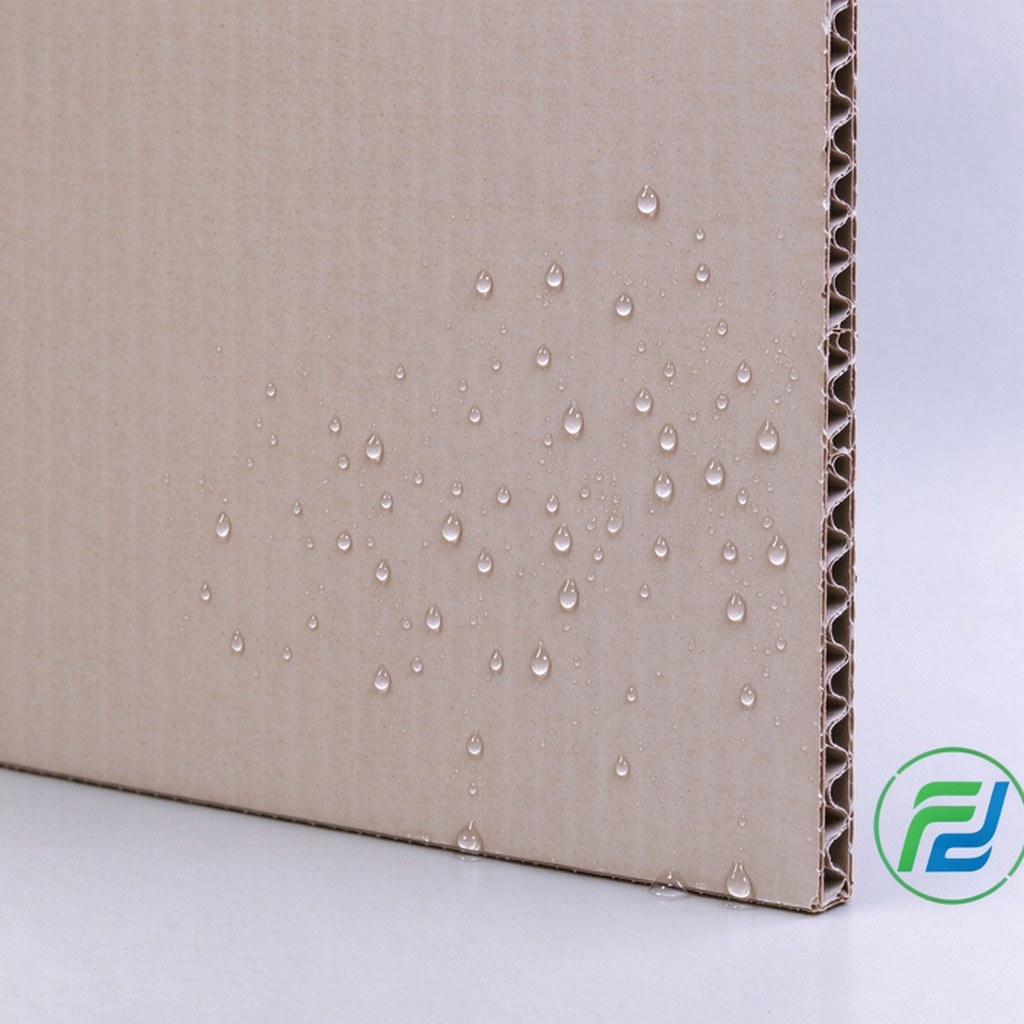
Container rain cuts carton strength on long sea routes. See how water-resistant board, coatings and desiccants work together, and what to check.
1. Know where the moisture comes from
On sea routes the main enemy is rarely seawater. It is container rain: day/night temperature swings push the air inside a container to its dew point, and water condenses on walls and roof before dripping or running down. Add wet pallets, undried container floors, loading in rain and humid destination warehouses. Corrugated board is hydrophilic, and vertical compression strength drops markedly as it absorbs moisture — which is why the bottom layer collapses late in a long voyage. Moisture control has to be designed as a system, not a single material.
2. Four lines of defence
- The board itself: water-resistant or water-repellent board uses sizing and additives to lower water absorption. It is used for cold chain, produce, seafood, damp warehouses and long voyages. It preserves box strength; it does not make the carton waterproof.
- Surface coating or lamination: a barrier on the printed face that limits direct wetting and scuffing, and protects graphics. Note that lamination complicates recycling, so confirm compliance for markets such as the EU.
- Inner packaging: PE bags, foil laminates and VCI bags isolate the product from in-box humidity. They suit metal parts, electronics, powders and hygroscopic materials, and need vacuum or nitrogen flushing for true long-term barrier performance.
- Humidity control: silica gel, montmorillonite, calcium chloride desiccants and container desiccant poles absorb free water vapour. Dose by container volume, transit days, product moisture content and pack transmission rate — more is not automatically better.
3. Match the combination to the scenario
- General dry goods, voyages under 20 days: a well-specified corrugated carton, a top moisture sheet and moderate desiccant are enough; the priority is isolating the pallet from the case bottom.
- Humid destination ports or voyages over 30 days: upgrade to water-resistant board, add an internal coating or curtain, use container desiccant poles, and check container floor moisture before loading.
- Metal and electronic parts: lead with a sealed inner bag plus desiccant and a humidity indicator card; the outer carton carries stacking loads. Add VCI where corrosion is a risk.
- Cold chain and high condensation risk: water-resistant board is effectively mandatory, and compression retention after repeated low-temperature condensation cycles matters more than ambient figures.
- Powders and food ingredients: prioritise inner bag seal integrity and confirm food-contact compliance.
4. Structural details that are easy to miss
- Place a moisture barrier sheet between pallet and case bottoms to stop upward migration.
- Keep stacking within the case footprint; overhanging walls wick moisture and deform faster.
- Leave headroom in the container and keep goods off the walls to reduce direct contact with condensation.
- Standard carton sealing tape can fail when damp; use weather-resistant tape and an H or cross seal.
- Printing and labels must also resist water — an unreadable shipping mark causes sorting errors at destination.
- Inspect inner bag seals separately: a sound carton with a leaking bag is a failed moisture system.
5. Checks worth writing into a purchase order
- Water absorption or Cobb value of the board, with test conditions and duration stated
- Edge crush test (ECT) or bursting strength, specifying whether measured at ambient or after humidity conditioning
- Compression test with defined stacking layers, load and duration
- Coating or film type, grammage and a recyclability statement
- Desiccant type, dosage per unit, indicator card inclusion and relevant safety compliance
- One simulated high-humidity storage or condensation cycle at sample stage before releasing mass production
6. A practical decision order
Estimate transit days and destination climate first, then set the board grade. Decide next whether inner bags and desiccants are needed, and finally close the two most common entry points — the pallet and the container wall — with structural details. Spend should track product value, claim risk and brand experience: ordinary dry goods do not need an electronics-grade moisture system, but metal and electronic parts can never rely on a thicker carton alone.