
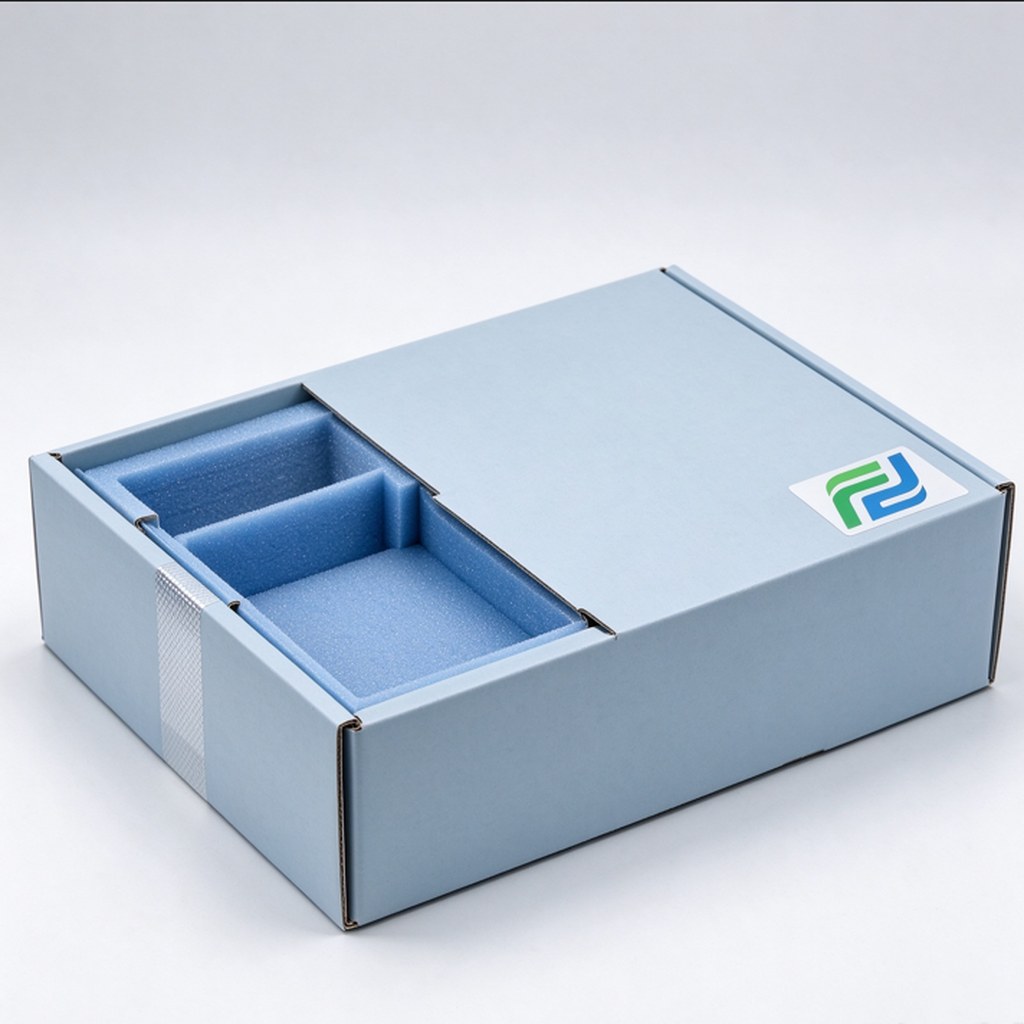
ESD damage is often latent. Compare anti-static, dissipative, conductive and shielding materials, then apply a practical selection and inspection checklist.
1. Why ESD problems surface only after delivery
Electrostatic discharge damages semiconductors in two ways. A hard failure kills the part immediately; a latent failure shifts parameters while the device still passes factory test, then fails early in the customer's assembly. Latent damage costs far more than the packaging and is hard to trace. The goal of ESD packaging is therefore not simply to wrap tightly, but to dissipate charge at a controlled rate and to isolate the contents from external fields and triboelectric charging in transit.
2. Four material classes that are often confused
- Anti-static: mainly suppresses charge generation on its own surface, with relatively high surface resistivity and no deliberate discharge path. Used for liners, dividers and trays.
- Dissipative: bleeds charge at a controlled rate, avoiding a fast high-current event. The most common direct-contact material, seen in pink or blue PE bags, foams and totes.
- Conductive: low resistance and rapid discharge, used where equipotential bonding and grounding exist — conductive foam, black conductive boxes and component shunts. Check discharge rate before placing it directly against sensitive leads.
- Shielding: a multilayer structure with a metallised layer forming a Faraday cage, blocking external fields and limiting internal discharge. The familiar silver-grey shielding bag is the workhorse for boards and modules.
Colour is not a specification. A pink bag is not a shielding bag; rely on material data and test reports.
3. Layer the design by sensitivity
- Direct contact: choose dissipative or conductive materials according to the device ESD sensitivity classification — shielding bags, dissipative foam, component trays, conductive sponge.
- Cushioning and restraint: dissipative foam, EPE or moulded pulp liners prevent sliding and re-charging while absorbing mechanical shock.
- Consolidation: dissipative totes or shielded liner bags outside the primary bag, with ESD warning labels and grounding instructions on the outer pack.
- Outer carton and pallet: standard corrugated carries the stacking load; add an internal shielding layer where needed. Balance moisture control as well, since very dry air increases charging while excessive humidity risks the devices.
The critical point: shielding must form a closed envelope. An unsealed or unfolded bag provides essentially no shielding.
4. Supporting conditions that are easy to miss
- The packing area needs ESD mats, grounded wrist straps and ionisation. A certified bag sealed at an uncontrolled workstation is wasted effort.
- Humidity control and logging in both warehouse and production areas, since dry air sharply increases charging.
- Labels and documents: ESD warning marks, sensitivity class, opening conditions and grounding notes must travel with the goods.
- Coordination with other requirements: moisture barrier bags, desiccants and VCI materials can change surface resistance, so validate the whole system.
- Recyclability and customer specifications: some buyers dictate bag colour, printed content or banned materials. Confirm before quoting.
5. Incoming inspection checklist
- Obtain surface and volume resistivity reports and match them to the batch.
- Verify shielding energy or induced-voltage test reports rather than judging by appearance.
- Check seal integrity and fold closure to confirm a closed shield.
- Confirm liners restrain the parts, with no movement or rub marks after transit simulation.
- Reconcile labels, warnings, part numbers and quantities against the packing list.
- Run a vibration and drop simulation, then retest both packaging and device function.
- Record packing-area humidity and grounding checks.
6. One simple selection rule
First decide from the device ESD sensitivity class whether a shielding bag is mandatory. Then use dissipative materials for all direct contact and cushioning. Finally let an ordinary corrugated shipper carry the stacking and transport loads. Assigning "shield, dissipate, restrain" to specific materials produces far more accurate supplier quotes and a much clearer pass/fail inspection than a generic request for anti-static packaging.